COVID-19, otherwise known as coronavirus disease 2019, is a new infectious disease caused by a previously
unknown virus called SARS-CoV-2. The virus is part of a family of coronaviruses which are responsible for
lots of different illnesses from the common cold to the flu. But this new strain can be more severe in some
people.
When did COVID-19 start?
The virus was discovered in Wuhan, China in December 2019 and has since spread around the world. It was
declared a pandemic by the World Health Organization in March 2020.
WHAT SHOULD I DO IF I HAVE COVID-19 SYMPTOMS?
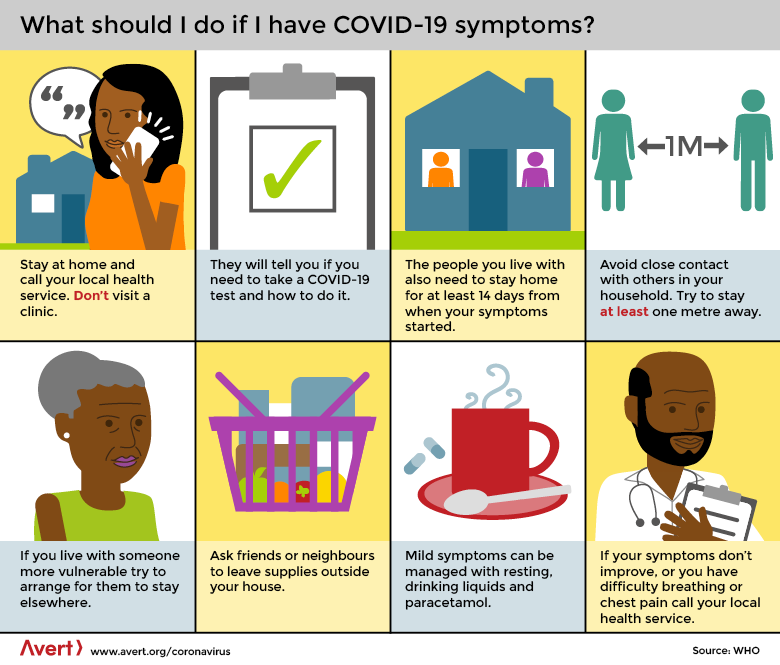
Most people who get coronavirus (COVID-19) recover without needing special medical care. If you think you
have COVID-19, stay home and call your local health service or information line for advice.
What happens in serious cases of COVID-19?
In some cases, people will become more seriously ill with COVID-19. Symptoms of severe COVID-19 include
shortness of breath, loss of appetite, confusion, chest pain or a high temperature. If you experience any of
these symptoms, it’s important to seek medical care straight away. In critical cases, COVID-19 can lead to
death.
Frequently Asked Questions About COVID-19 :
When do symptoms start to appear?
The average time for symptoms of COVID-19 to develop is five to six days, but it can take up to 14 days for
people to show symptoms.
Are there long-term effects of COVID-19?
Some people have reported experiencing continued symptoms after having COVID-19, such as fatigue, breathing
problems and neurological problems. This includes people with less severe cases of COVID-19, as well as
those who have needed hospital care.
Research is currently underway to better understand how many people experience long-term effects of
COVID-19, and the nature of these symptoms.
Does COVID-19 need treatment?
The majority of people who get COVID-19 recover at home, without needing special treatment, usually within
about seven days.
Most people will only have mild symptoms similar to the common cold. Resting, drinking lots of liquids, and
taking paracetamol or other home remedies can help with symptoms.
Around 15 in 100 people who get COVID-19 will become severely ill and develop difficulty breathing, in which
case they will need hospital care. A small number of these people will become critically ill and need
intensive care.
Who is more vulnerable to COVID-19?
Anyone can get COVID-19 and become seriously ill. The likelihood becoming severely ill is higher for people
over 60 and those with certain underlying health issues, including high blood pressure, heart or lung
problems, diabetes, obesity or cancer.
People with a weakened immune system – for example if they are having chemotherapy treatment for cancer, or
have a low CD4 count as a result of HIV – are also at a higher risk of serious illness.
Symptoms / Precautions
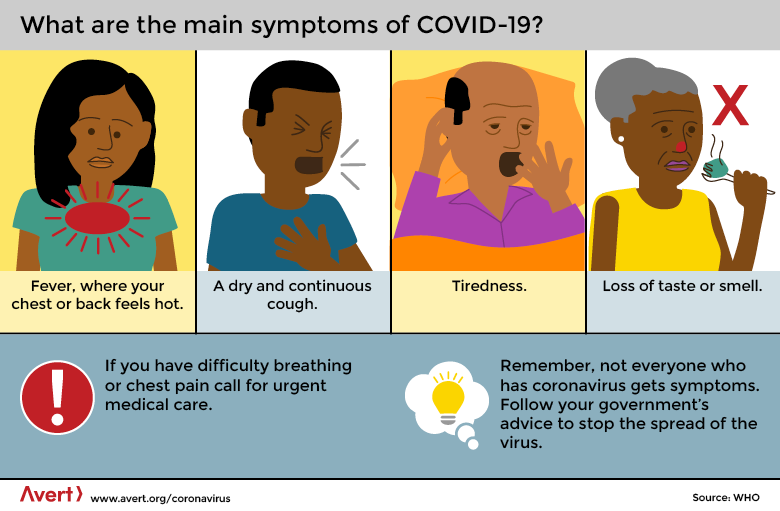
The main symptoms of COVID-19 are:
fever,
dry cough,
tiredness,
loss of taste or smell.
Some people experience other flu-like symptoms, including: nasal congestion, conjunctivitis (red eyes), sore
throat, headache, muscle or joint pain, skin rash, nausea or vomiting, diarrhoea, chills or dizziness. These
symptoms can be managed at home.
Not everyone who has COVID-19 will have symptoms. You can still pass COVID-19 on even if you don’t have
symptoms. That’s why it’s important to follow advice to stop the virus from spreading.
Precautions
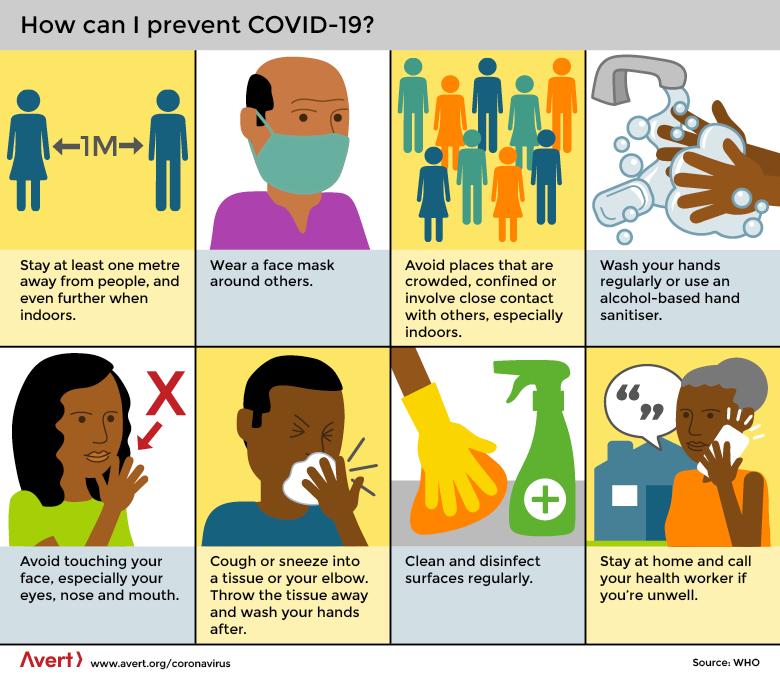
Keeping a one metre distance from people as much as possible, and even more when you are indoors.
Wearing a face mask when you are around other people.
avoiding places that are crowded, confined or involve close contact, especially indoors,
washing your hands regularly with soap and water for at least 40 seconds – if you don’t have access
to clean water and soap, use an alcohol-based hand sanitizer and keep rubbing it into your hands for
20 seconds,
avoiding touching your face,
sneezing or coughing into a clean tissue, and then throw it away and wash your hands - if you don’t
have a tissue, use the inside of your elbow to cover your mouth,
regularly cleaning and disinfecting surfaces,
staying at home if you feel unwell, and calling your healthcare provider for advice,
only meeting people outdoors, if you are allowed to meet with people from outside your household.